Ongoing Text

AdaptGAIT

This study evaluates whether adaptive deep brain stimulation (aDBS), triggered by the NUSHU system, is safe and effective for improving walking and balance problems in people with Parkinson’s disease. NUSHU detects gait events and activates the stimulation.

Hero Image

About E!1470 NUSHU R

E!1470 NUSHU R is a Eureka Eurostars project. Eurostars is the largest international funding program for SMEs wishing to collaborate on R&D projects that create innovative products, processes, or services for commercialization.

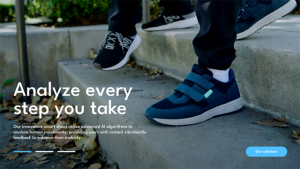
The goal of this project is to bring to market a wearable, at-home gait rehabilitation system that will aid stroke survivors in their recovery. The system is based on NUSHU smart shoes, with integrated sensors and real-time processing functionality that provide immediate feedback to patients. The system allows remote monitoring by measuring the ambulatory activity and provides rehabilitation exercises with real-time biofeedback.

Eureka Eurostars project in numbers:

1.75B €
Public/private investment since 2014
84%
Project partners form long-term relationships
45%
Participants reach new markets

Project Partners

Magnes AG

Magnes AG (Main partner): Magnes is a spinoff of the Institute of Robotics and Intelligent Systems of ETH Zurich. Magnes has developed a disruptive real-life-monitoring solution to analyze walk patterns of patients with neurological disorders. It is the only solution to give direct vibrotactile biofeedback to patients. Using smart sensors embedded in sneaker-like shoes it collects data while the patient is walking or doing daily activities. Magnes AI processes the data to generate automatic reports and provide the patient with direct feedback on their gait or warn/prevent situations like falling. The technology can change the way clinical trials are performed today and improve efficacy by enabling data-driven therapy through tailored medication dosage.

European Brain Research Institute (EBRI) Rita Levi-Montalcini

Established in 2002, by the will of Nobel Prize winner Rita Levi-Montalcini, EBRI addresses the need for a center in Europe where fundamental research on the brain can be conducted with the aim of identifying new therapeutic strategies for neurodegenerative diseases such as Alzheimer's and other serious disorders of the nervous system. The goal of the European Brain Research Institute is to study the biological basis of the higher functions of the mammalian brain: the relationships between mind and brain and the mechanisms of memory. Today, there are technologies that allow the brain to be studied at every level of its complexity and EBRI will utilize new technologies such as those provided by genetics, molecular biology, neurophysiology, cellular and molecular imaging, computer sciences, and the study of behavior and, above all, emerging genomic and proteomic technologies.
Learn more

Deep Blue

Deep Blue is an Italian company, founded in 2001, that specializes in research and consulting on human-centered design and validation in transport, manufacturing, healthcare, and environment. Its mission is to help organizations innovate by analyzing problems and procedures, designing tailored solutions, and validating them in the field. They provide consultancy in human factors, safety, security, and sustainability, as well as professional training. It has gained an international reputation due to its extensive high-quality contribution to the field of aviation and air traffic control. They are the first SME to participate in a number of projects in safety and aviation under H2020. Deep Blue served the European Commission, Eurocontrol, and SESAR Joint Undertaking, among other EU bodies.
Learn more

Our latest news

All News
All News