
Publications
NUSHU's technology is built on rigorous scientific research and clinical validation. We collaborate with leading research institutions and healthcare professionals worldwide to advance the understanding of human movement and improve mobility outcomes.
08.05.2025
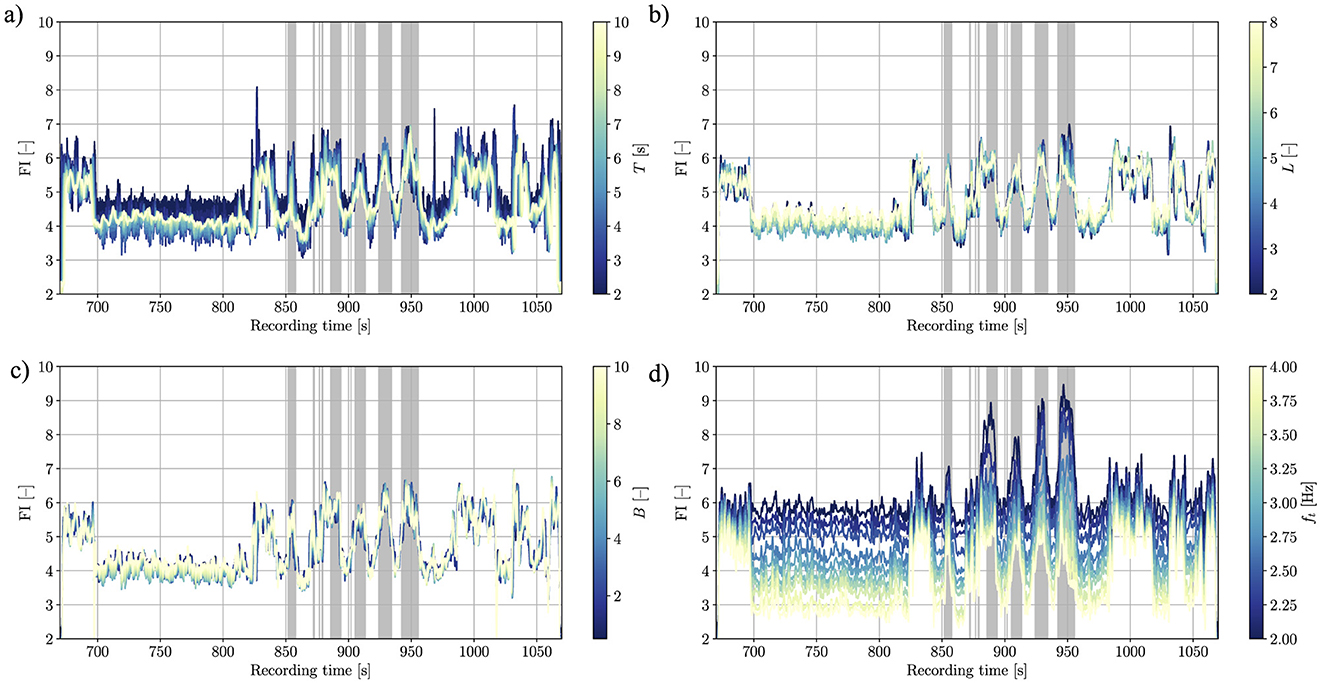
Toward a unified gait freeze index: a standardized benchmark for clinical and regulatory evaluations
Automatic methods for detecting FOG using the freeze index (FI) have been widely proposed to systematically monitor FOG in real life and guide therapy optimizations. However, methods to estimate the FI have relied on a broad range of measurement technologies and computational methodologies, often lacking mathematical rigor. This lack of standardization has severely hindered the acceptance of FI by regulatory agencies as a reproducible, robust, effective and safe measure on which to base further developments. In this study, we formalize the definition of the FI and propose a rigorous, explicit estimation algorithm, which may serve as a standard for future applications. This standardization provides a consistent and reliable benchmark.
Learn more
15.04.2021
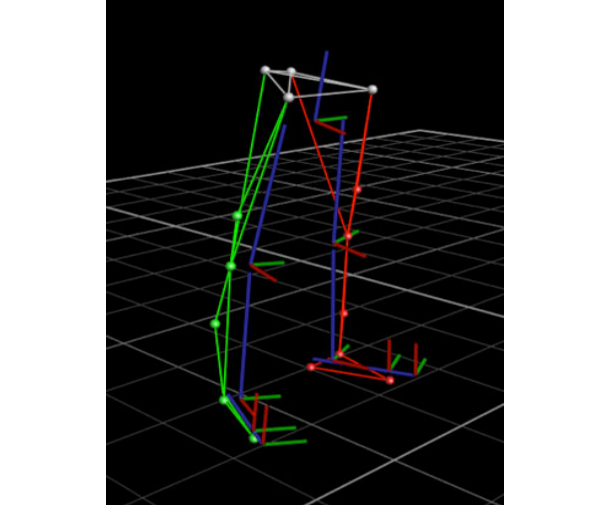
An Intelligent In‐Shoe System for Gait Monitoring and
Analysis with Optimized Sampling and Real‐Time
Visualization Capabilities
The deterioration of gait can be used as a biomarker for ageing and neurological diseases.
Continuous gait monitoring and analysis are essential for early deficit detection and personalized reha‐
bilitation. The use of mobile and wearable inertial sensor systems for gait monitoring and analysis have
been well explored with promising results in the literature. In this work, we developed an
inertial sensor based in‐shoe gait analysis system for real‐time gait monitoring and investigated the
optimal sampling frequency to capture all the information on walking patterns. An exploratory valida‐
tion study was performed using an optical motion capture system on four healthy adult subjects.
Press Here
08.12.2022
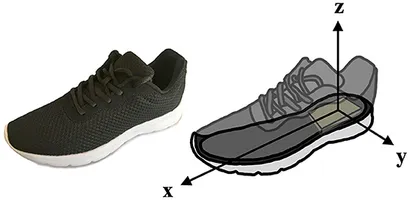
Human gait-labeling uncertainty and a hybrid model for gait segmentation
Motion capture systems are widely accepted as ground-truth for gait analysis and are used for the validation of other gait analysis systems. To date, their reliability and limitations in manual labeling of gait events have not been studied.
Objectives: Evaluate manual labeling uncertainty and introduce a hybrid stride detection and gait-event estimation model for autonomous, long-term, and remote monitoring.
Methods: Estimate inter-labeler inconsistencies by computing the limits-of-agreement. Develop a hybrid model based on dynamic time warping and convolutional neural network to identify valid strides and eliminate non-stride data in inertial (walking) data collected by a wearable device. Finally, detect gait events within a valid stride region.
Link